Tea and chocolate both offer a wide range of flavour notes, from delicate and floral to deep and roasted.
When thoughtfully paired, they can highlight each other’s qualities, creating a tasting experience that is both balanced and interesting. You may find that your tea can soften the sweetness of chocolate or highlight unexpected flavour notes.
When planning your pairing, consider what your goals are for the taste experience - perhaps you are looking to match intensity, complement flavour notes and harmony, or create gentle contrast. Or simply a desire to experiment and play with flavours.
This blog outlines some simple guidelines and further down we offer combinations to explore at home.
Different Ways to Approach Your Tea and Chocolate Pairing
1. Intensity – A Balance of Strength and Richness
A useful starting point is to match the strength of the tea with the richness of the chocolate.
- Delicate teas tend to work best with lighter chocolates.
- Robust teas can stand alongside darker, more intense chocolate.
If a tea is too light for a very strong chocolate, its character can become lost in the tasting.
2. Harmony - Look for Complementary Flavours
Many teas and chocolates share naturally occurring flavour notes such as floral, nutty, fruity, or roasted tones, making them feel like natural companions.
Some examples of this harmony are matching:
- Creamy mouth texture with equally smooth chocolate pieces
- Shared notes across both tea and chocolate e.g nuttiness, vanilla, fruit, spice, citrus, or floral.
- Warm tea profiles that echo the richness of milk chocolate or buttery white chocolate.
3. Contrast – Highlight the differences
Some pairings work well because they contrast each other. A bright, brisk tea can help balance the richness of chocolate, while a smooth tea can soften the intensity of a very dark chocolate. Consider:
- Pairing bold, earthy elements with bright or refreshing flavours.
- Using bitterness, sweetness, and acidity to play off one another.
- Combine textures. Pair crisp or astringent teas with silky or dense chocolates for sensory contrast.
Tea and Chocolate Pairing Suggestions
Below are several suggested (and general) combinations to explore.
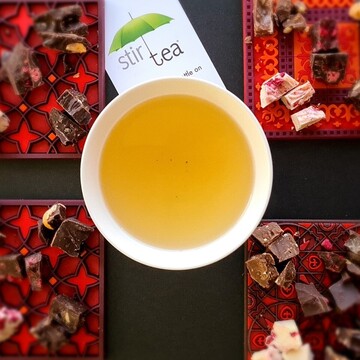
Green Tea and Light Chocolate
Fresh green teas often carry grassy, nutty, or lightly sweet notes. These characteristics can pair well with:
- White chocolate
- Milk chocolate with subtle sweetness
- Chocolates containing nuts or light caramel notes
Here, the fresh qualities of green tea are complemented by the creaminess of the chocolate.
Black Tea and Dark Chocolate
Full-bodied black teas provide structure and depth, making them a natural companion for richer chocolate.
Good combinations include:
- Dark chocolate (60-70% cacao)
- Dark chocolate with orange or spice notes
- Dark chocolate with roasted nut flavours
The strength of the tea helps to balance the richness of the chocolate.
Herbal Infusions and Flavoured Chocolate
Herbal infusions can bring a bright, aromatic, or refreshing quality that works well with flavoured chocolate.
Some examples to try include:
- Peppermint infusion with dark chocolate
- Floral infusions with fruit-accented chocolate
- Citrus herbal blends with milk chocolate
These pairings often feel lively and refreshing.
How to Taste Tea and Chocolate Together
Here are some simple steps to set up your tasting. Set up your area so that it is calm and clear, and you can bring focus to your sense of taste and smell.
- Brew your tea and allow it to cool slightly so the flavours are easier to distinguish.
- Take a small piece of chocolate, smell it, and then let it melt slowly; do not chew it. Roll the piece in your mouth and suck in some air. Pay attention to the texture, flavours, and aromas.
- Now sip the tea, swirling it gently around your mouth and notice how the flavours evolve and change (*Reference 1).
Some tips to help you set up your tea and chocolate pairing party at home:
- Tea - select three to five teas with different flavour profiles (see our suggested flavours further down in this article) to brew throughout the course of your tasting event. For your first party we suggest you start with three teas. Complete your sampling of each tea flavour with all the chocolates before you move on to your next tea.
- Brew each tea according to the suggested guidelines so that its character is clear. It is useful to prepare your boiling/hot water prior to the event and store it in vacuum flasks ready for brewing each new tea. Premeasure your tea leaf and have teapots to hand for seamless hosting.
- Chocolates – offer a variety of different cacao percentages or flavour notes, including dark, milk and white chocolate, either pure or with additions of nuts, citrus, etc (we suggest five different chocolates offers a wide range, with each guest given a selection of all flavours to sample with each tea).
- Small portions of chocolate -break your chocolate into small portions so you can explore several combinations without overwhelming the palate.
- Start your tasting with the chocolate first, followed by the tea.
- Try switching the tasting sequence of tea and chocolate to see if you notice a difference.
- Many teas in the Stir Tea range can also be infused multiple times, which can reveal slightly different flavour expressions in each cup. Your tasting experience may evolve over multiple sips, bites and infusions
- Remember - we all notice different flavour connections, so it is a personal experience to you – no right or wrong answer.
A Tea and Chocolate Pairing Guide to start with
The table below offers a starting point for exploring how different Stir Tea styles can complement a range of chocolates.
|
Stir Tea Selection |
Tea Style |
Chocolate Pairing |
Why It Works |
|
Green tea |
White chocolate or milk chocolate with almonds |
The smooth, gently nutty character of Dragonwell sits comfortably with the creamy sweetness of lighter chocolates. |
|
|
Green tea |
White chocolate or citrus - infused dark chocolate |
The floral aroma of jasmine pairs well with delicate sweetness and bright citrus notes. |
|
|
Green tea |
Milk chocolate or chocolate with toasted rice or nut notes |
Sencha’s fresh vegetal notes contrast nicely with creamy chocolate. |
|
|
Black tea |
Dark chocolate (60–70% cacao) |
The full-bodied structure of this tea complements the richness and intensity of dark chocolate. |
|
|
Black tea with bergamot |
Dark chocolate with orange or citrus notes |
The citrus character of bergamot echoes similar flavours often found in chocolate pairings. |
|
|
Spiced black tea |
Milk chocolate or spiced chocolate |
Warm spices in the tea pair naturally with creamy chocolate and subtle spice flavours. |
|
|
Flavoured black tea |
Milk chocolate or chocolate with caramel |
The soft, creamy notes of the tea work well with smooth chocolate and caramel tones. |
|
|
Herbal infusion |
Dark chocolate or chocolate with dried fruit |
Rooibos has a naturally rounded sweetness that complements rich chocolate flavours. |
|
|
Herbal infusion |
Dark chocolate (especially high cacao) |
The refreshing peppermint notes contrast beautifully with the depth of dark chocolate. Because our Peppy Mint is very strong, we found a lighter brew worked best. |
*Reference 1 – Chapter 8 of Mariella Erkens Book called Tea Wine’s Sober Sibling offers a whole chapter on Chocolate and Tea, along with other wonderful Tea and Food suggestions.
Posted: Tuesday 10 March 2026