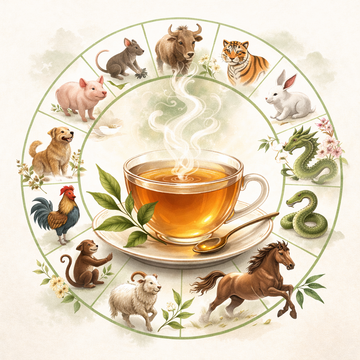
Both the zodiac and tea culture are rooted in observation of cycles - seasons, elements, and the passage of time.
While the associations are symbolic rather than prescriptive, they offer a thoughtful way to consider tea not only as a beverage but as part of a broader cultural tapestry shaped by history, craft, and connection.
Below is an exploration of each of these 12 animals and their association with tea, followed by an outline of the five elements associated with the lunar new year.
1. Rat – Resourcefulness and Adaptability
The Rat represents intelligence and adaptability. Tea, too, has proven remarkably adaptable - evolving from compressed cakes traded across borders to delicate loose-leaf infusions enjoyed worldwide.
The Rat’s quick thinking mirrors tea’s ability to suit many settings: formal ceremonies, bustling markets or quiet moments at home.
2. Ox – Patience and Steady Craft
The Ox symbolises diligence and perseverance. Tea cultivation reflects these qualities. From tending the plants to careful plucking and processing, fine tea is the result of steady, skilled work.
The agricultural rhythms that sustain tea gardens echo the Ox’s dependable nature.
3. Tiger – Strength and Boldness
The Tiger embodies courage and presence. In the world of tea, bold, full-bodied styles such as heavily oxidised oolongs or robust black teas reflect this confident character.
The Tiger reminds us that tea can be expressive and commanding, not only delicate.
4. Rabbit – Elegance and Refinement
The Rabbit is associated with gentleness and grace. White teas and lightly oxidised green teas often reflect this refined character - subtle in aroma, elegant in texture and quietly complex.
Tea appreciation itself can be a mindful, attentive practice, aligning with the Rabbit’s thoughtful temperament.
5. Dragon – Power and Auspicious Energy
The Dragon is the only mythical creature in the zodiac and symbolises strength and prosperity. Tea has long been linked to status and ceremony, particularly during imperial times.
Dragon motifs frequently appear on traditional teaware, representing vitality and good fortune. The grandeur of formal tea service resonates with the Dragon’s presence.
6. Snake – Wisdom and Transformation
The Snake represents intuition and transformation. Tea undergoes a remarkable transformation during processing (withering, rolling, oxidising or firing), turning fresh leaves into complex infusions.
This metamorphosis reflects the Snake’s symbolic shedding and renewal.
7. Horse – Movement and Exchange
The Horse symbolises energy and travel. Its association with tea is deeply historical. Along the ancient Tea Horse Road, tea was traded for horses across mountainous terrain. Caravans carried compressed tea through remote regions, forging cultural exchange and economic ties.
The Horse reminds us that tea’s story is one of movement and connection.
8. Goat (Sheep) – Harmony and Creativity
The Goat is linked to calmness and artistic sensitivity. Tea gatherings often foster harmonious settings - thoughtfully arranged teaware, balanced flavours and shared appreciation.
The aesthetics of tea preparation, from ceramics to presentation, reflect the Goat’s creative spirit.
9. Monkey – Curiosity and Innovation
The Monkey symbolises ingenuity and playfulness. Tea culture continues to evolve, with new brewing methods, contemporary blends and creative culinary uses.
Innovation within tea, whilst respecting tradition, reflects the Monkey’s inventive character.
10. Rooster – Precision and Attention to Detail
The Rooster represents order and attentiveness. Tea preparation rewards precision: leaf quantity, water temperature and steeping time all shape the final cup.
The Rooster’s careful nature aligns with the disciplined craft behind fine tea.
11. Dog – Loyalty and Trust
The Dog symbolises sincerity and loyalty. Tea often becomes a daily companion - a familiar presence woven into routine and hospitality.
Across cultures, offering tea is a gesture of welcome and trust, reflecting the Dog’s steadfast character.
12. Pig – Abundance and Enjoyment
The Pig is associated with generosity and contentment. Tea gatherings frequently centre around abundance - shared pots, multiple infusions and extended conversation.
The enjoyment of tea is rarely hurried; it encourages presence and appreciation, qualities embodied by the Pig.
The five elements:
Additionally, each year is also associated with one of five elements; Wood, Fire, Earth, Metal, or Water. These five elements are set in a specific order, as one creates or controls the next. For example;
- Wood makes Fire burn: Wood acts as fuel for fire.
- Fire creates Earth: Fire burns materials, leaving behind ash, which becomes part of the earth/soil.
- Earth bears Metal: Minerals, ores, and metal are formed within the earth.
- Metal carries Water: Metal can be shaped into containers (buckets, pipes) that hold or transport water.
- Water feeds Wood: Water nourishes plants, trees, and wood.
The elements work with the Chinese Lunar New Year to influence the 12 zodiac animals, creating a 60-year cycle. Each year combines an animal and an element, affecting the year's personality, fortune, and energy.
Here is how the five elements function during the Lunar New Year
- 0 or 1: Metal
- 2 or 3: Water
- 4 or 5: Wood (e.g., 2024=Wood Dragon, 2025=Wood Snake)
- 6 or 7: Fire (e.g., 2026=Fire Horse)
- 8 or 9: Earth
If we delve even further into the elements, each one is attributed a personality influence.
- Element Personality Influence:
The description of these calendar animals and their relationship to tea leaves is a wonderful example of the wide reach, deep history and magic offered in each cup of loose leaf tea.
Happy Tea Times Folks
Posted: Monday 9 March 2026